The Lantern
If you have not already discovered it, Ilfracombe has a wonderful resource center in The Lantern – a place where community events occur including talks, club events, performances and even a farmer’s market! The renovated historic building is owned and managed by the Ilfracombe Town Council, Local individuals, community groups and businesses can use the Great Hall or meeting rooms to enjoy and share informational sessions, celebrations and events. If you are interested in learning more about The Lantern and how you can take advantages of this site, check out the following link: https://www.visitilfracombe.co.uk/item/the-lantern/
To book this facility, you can call 01271 855300 or visit the Ilfracombe Centre in person.
And to be sure to stay current about upcoming local events at The Lantern, and other venues in town, be sure to check out the Visit Ilfracombe page at: https://www.visitilfracombe.co.uk/events/
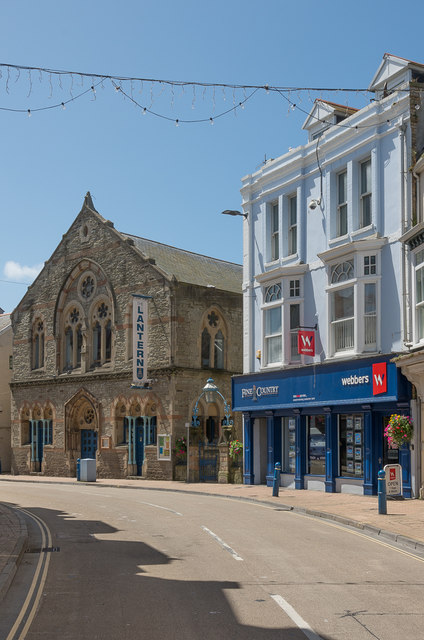
The Lantern and 48 High Street by Ian Capper is licensed under CC-BY-SA 2.0
Seagulls
One fascinating talk was given in the Great Hall of the Lantern last March addressed a topic residents of Ilfracombe have a direct interest in – urban gulls! It is impossible to walk down the High Street or inhabit many residential dwellings without hearing, seeing and interacting with local gulls. I attended this talk to learn more about these animals that both symbolize the cherished mariner culture of Ilfracombe, and that aggravate so many who live here. The talk was given by Peter Rock, a scientist affiliated with the University of Bristol. He has been studying Bristol’s roof-nesting gulls (in particular herring gulls and lesser black-backed gulls) for over 40 years and written several papers on the urban gulls and their behaviors. He emphasized that an informed understanding of the behavior of these urbanized gulls is critical to identifying useful mitigation strategies for better coexistence. I also did some reading to follow up on information I learned at this talk and found out the following information.
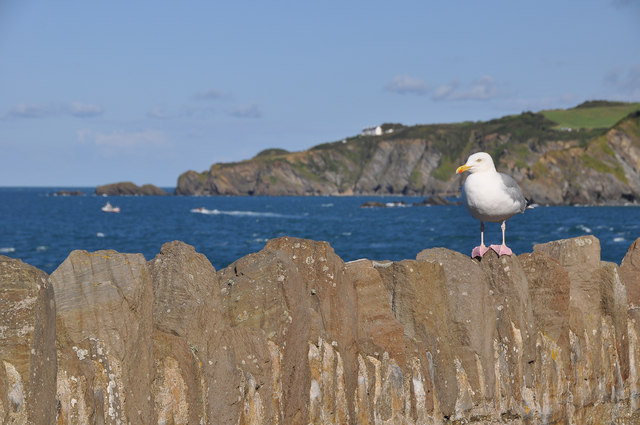
Ilfracombe : Coastal Scenery & Seagull by Lewis Clarke is licensed under CC-BY-SA 2.0
Urban gulls are growing in numbers, in part because they benefit from the advantages of nesting on building rooftops rather than more precarious natural settings: fewer predators, and more readily and immediately available food. One article stated when Rock first began studying gulls in Bristol in 1980, there were 100 nesting pairs; in 2021 there were an estimated 2,500 pairs! Some advantages these gulls have is long lives, so they benefit from experientially based tricks of survival including knowing where to get food. They also have noted problem-solving intelligence. Other factors leading to an increase in gulls living in and reliant on urban settings include declining natural food supplies (due to over-fishing, climate changes and other causes) as well as landfill practices that encourage raiding these waste sites. Yet despite our sense of increased numbers around us in towns and cities, and complaints about their presence and impact, the reality is wild populations of gulls (those not living and reliant on urban resources) are in decline. Scientists estimate those species most prevalent in urban settings are experiencing population decline in the wild: herring gulls by 60% and black-backed gulls by 30% over the past quarter of a century. Only the urban populations appear to be thriving. Because of these facts, gulls are protected under the Wildlife and Countryside Act (1981) and can only be killed in very specific, limited circumstances. (See link to Act: https://www.legislation.gov.uk/ukpga/1981/69/contents
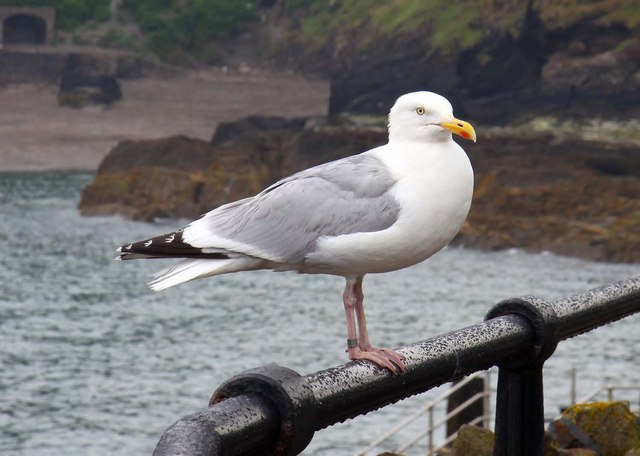
A seagull at Ilfracombe by Steve Daniels is licensed under CC-BY-SA 2.0
Though many approaches have been tried to reduce them nesting in urban buildings (fake owls, spikes, netting), none have proven very effective. Urban gulls generate conflicting responses – some are frustrated by their noise, tired of ripped up garbage bags and strewn rubbish, and concerned about perceived aggressive behaviors like stealing food from hands, while others see urban gulls as natural neighbors, admire their intelligence and resilience.

I learned a great deal from this talk and you can find out more about the findings and observations of Peter Rock by reading the following sources:
BBC article: https://www.bbc.co.uk/future/article/20210615-why-sea-gulls-are-making-their-homes-in-our-cities
Summary of talk to Exeter community group: https://group.rspb.org.uk/exeter/news-blogs/blog/urban-gulls-a-talk-by-peter-rock/
List of Peter Rock’s publications: https://www.researchgate.net/profile/Peter-Rock-6
“Seagull study by psychologists to see how they interact with humans”: https://marketbusinessnews.com/seagull-study-by-psychologists-to-see-how-they-interact-with-humans/125972/
 Ilfracombe postings
Leave a comment